Views: 0 Author: Site Editor Publish Time: 2026-07-10 Origin: Site


The traditional panga was once viewed strictly as a utilitarian workboat for artisanal fishermen. Today, it has evolved into a sophisticated, highly sought-after vessel for modern recreational and commercial boaters. This striking transformation commands serious attention across the entire marine industry. Rising fuel costs push buyers toward more efficient options daily. Furthermore, anglers consistently demand shallow-draft versatility combined seamlessly alongside offshore capability. These mounting pressures mean the modern fiberglass panga boat is heavily disrupting the traditional center console and bay boat markets. Buyers often struggle to find clear facts amid aggressive sales pitches. This guide provides a critical, evidence-based framework for evaluating your next purchase. We separate engineering reality from marketing hype. You will learn exactly how to evaluate hull construction, analyze ride compromises, and shortlist builders tailored to your unique requirements.
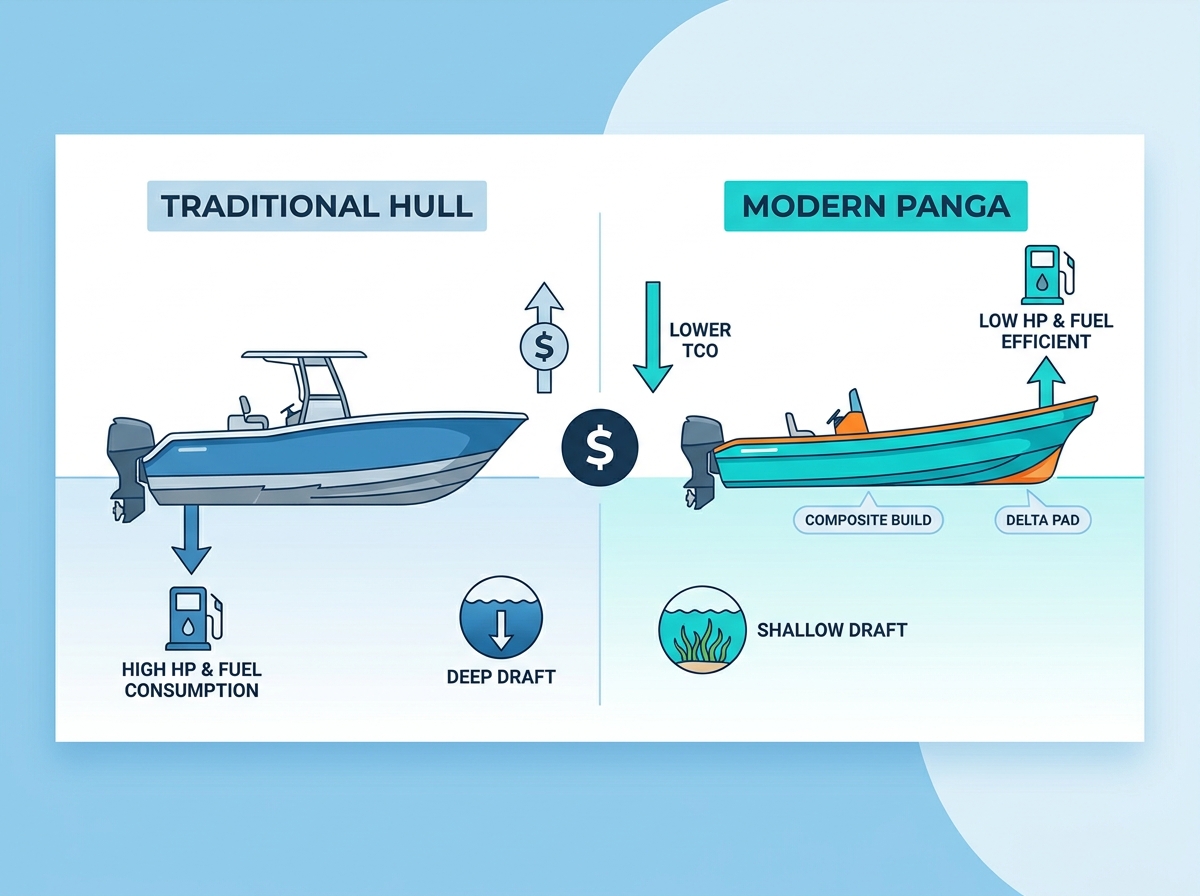
Efficiency over horsepower: The distinct delta pad and narrow beam design allow fiberglass pangas to achieve planning speeds with significantly less horsepower than traditional center consoles.
Versatility comes with trade-offs: While capable of navigating both shallow flats and offshore chop, buyers must account for a narrower beam that impacts lateral stability at rest.
Construction dictates longevity: Evaluating stringer grids, composite transoms, and fiberglass layups is critical, as build quality varies heavily among modern manufacturers.
Total Cost of Ownership (TCO) advantage: A properly rigged fiberglass panga reduces upfront engine costs, lifetime fuel consumption, and maintenance overhead compared to wider, heavier vessels.
Buyers today face a highly fractured market. Bay boats often draft too deeply for true flats fishing. Conversely, flat skiffs remain unsafe in unpredictable offshore chop. Traditional deep-V center consoles demand massive horsepower. This requirement heavily inflates both acquisition and operational expenses. You are often forced to choose between shallow-water access and blue-water safety. These compromises leave many anglers frustrated.
The panga hull offers a distinct hydrodynamic solution. It features a unique delta-pad bottom, a notably high bow, and a narrow beam. This combination cuts cleanly through heavy chop. It also drafts in mere inches of water. Furthermore, the hull requires minimal propulsion to achieve planning speeds. They merge the best traits of different hull designs into one capable platform.
Modern builders recognize this immense potential. They have transitioned rapidly away from bare-bones commercial layouts. Today, they integrate fully molded liners and pressurized live wells. You will also find spacious casting decks and advanced composite materials. These upgrades make them highly viable competitors to premium recreational brands. They no longer feel like stripped-down workboats. Instead, they deliver refined aesthetics while retaining their legendary ruggedness. This is the reality of the vessel coming of age.
Evaluating construction quality requires looking past shiny gelcoat finishes. Build quality varies heavily across the industry. You must inspect the structural components carefully. We recommend focusing on four primary structural elements before making a purchase.
Fiberglass Layup: You must differentiate between hand-laid woven roving and heavy chopper-gun construction. Budget builders often spray brittle fiberglass using chopper guns. Hand-laid fiberglass provides the ideal strength-to-weight ratio. This precise ratio remains crucial for optimal hydrodynamic performance.
Stringer Systems and Decking: Always look for fully encapsulated, composite stringer grids. They form the rigid backbone of the vessel. You should strictly avoid older designs or budget builders using wood-cored stringers. Wood cores remain highly prone to rot over time.
Transom Integrity: A reliable vessel must feature a high-density composite transom. This component supports massive stress from modern four-stroke outboards. A strong transom prevents structural flexing. It also eliminates micro-cracking in the gelcoat during heavy offshore use.
Self-Bailing Decks: Offshore safety requires a fully functional self-bailing deck. You must verify the static water line against the internal scupper height. This ensures the deck actively drains water under full operational loads. Poorly designed decks can trap water and create hazardous instability.
A common mistake involves ignoring the internal hull finish. Rough fiberglass inside hatches often indicates rushed manufacturing. Best practices dictate inspecting all hidden compartments. High-quality builders finish their bilges and storage lockers smoothly. They understand attention to detail reflects overall structural integrity.
Every boat design requires specific compromises. The panga is no exception. Understanding these physical limitations ensures realistic expectations. You must evaluate how the hull behaves both underway and at rest.
The ride quality represents a major advantage. The exceedingly sharp entry and high sheer line effortlessly part head seas. They also deflect spray away from the cockpit. This geometry provides an exceptionally dry ride in rough, choppy conditions. They routinely outperform wider boats in steep head seas. You will notice immediate comfort when pushing through bad weather.
However, you must accept a noticeable stability trade-off. These hulls typically feature a length-to-beam ratio of 3:1 or greater. This narrow footprint means they exhibit a "snap roll" at rest. They possess lower lateral stability compared to wide-beam catamarans or modified-V hulls. Movement around the deck creates a noticeable shifting sensation. Modern designs incorporate reverse chines to dampen this effect. Still, it remains a fundamental characteristic of the narrow beam.
Load carrying capacity requires careful management. They carry heavy loads exceptionally well dynamically while on plane. The delta pad creates immense lift. Yet, buyers must carefully calculate static weight distribution. Placing multiple heavy anglers on one side causes uncomfortable listing. We advise distributing gear and passengers evenly across the centerline.
Hull Characteristic | Modern Panga | Deep-V Center Console |
|---|---|---|
Bow Sheer Height | Very High (Deflects spray) | Moderate (Prone to taking water) |
Draft Depth | 8 to 12 inches | 16 to 24 inches |
Resting Stability | Sensitive to weight shifts | Highly stable at rest |
Planing Efficiency | Excellent at low speeds | Requires high RPM/Thrust |
Selecting the right propulsion changes everything. Many buyers mistakenly apply traditional center console logic here. You must resist the urge to over-power the hull. These boats do not require massive engines.
A 22-foot fiberglass panga boat often performs optimally carrying a 90hp to 115hp outboard. In contrast, a standard 22-foot center console might require 200hp or more. The narrow beam significantly reduces wetted surface area. This physical trait lowers hydrodynamic drag. The delta pad at the stern provides high lift. This allows the hull to plane easily using minimal thrust. Pushing past the recommended horsepower rarely increases top speed significantly. It merely adds unnecessary weight to the transom.
Fuel economy realities are striking. You can expect real-world efficiency of 4 to 6 miles per gallon at cruising speeds. This effectively doubles the range of traditional hulls carrying the same fuel capacity. You spend far less time at the fuel dock. You gain more time exploring distant fishing grounds.
Implementation risks often arise during the rigging phase. You must pay close attention to under-deck rigging tubes. Poorly designed hulls lack adequate, dry chasing for modern electronics. They make installing trolling motor wiring difficult. Setting up NMEA 2000 networks becomes frustrating without proper conduits. Best practices involve verifying the diameter and placement of all internal rigging tubes before ordering.
The market features numerous builders claiming superior quality. Identifying the right manufacturer requires strict due diligence. You must evaluate their pedigree and physical build processes.
Identify the Builder's Pedigree: You must separate original mold owners from overseas "splash" hull importers. Splash builders copy existing hulls cheaply. They often lack stringent quality control protocols. Original innovators understand the naval architecture behind the design.
Warranty and Compliance: Always shortlist manufacturers offering a minimum 5-to-10-year transferable hull warranty. Look for builders meeting NMMA or USCG flotation standards. These certifications indicate a commitment to safety and engineering integrity.
The Sea Trial Checklist: Never buy based on static showroom appeal. You must test the boat actively in crosswinds. This checks for problematic bow-steering tendencies. Walk the gunwales at rest to personally evaluate the rolling characteristics. Make sure the static stability aligns with your comfort levels.
Your immediate next step requires requesting a detailed build sheet. Ask for this documentation from two or three shortlisted builders. Specifically compare their listed dry weight and beam width. Furthermore, compare standard hardware against optional upgrades. Look closely at cleats, hinges, and wiring harness quality. These small components indicate the true standard of the manufacturer.
The fiberglass panga has decisively matured from a regional necessity into a highly strategic choice. It appeals to boaters prioritizing efficiency, versatility, and rugged simplicity over superficial luxury. You no longer have to compromise between drafting in the flats and running offshore safely. By understanding hull construction, stability metrics, and rigging requirements, you can navigate the market confidently. Focus on composite materials, avoid overpowering the transom, and demand transparent warranties.
Before committing to a traditional, heavy center console, take action. Schedule a comprehensive sea trial with a reputable panga builder. Evaluate the narrow-beam, high-efficiency design firsthand. You will likely discover it aligns perfectly with your specific marine applications.
A: Yes, provided they are designed correctly. They must feature a self-bailing deck and adequate freeboard. You must also operate them within the limits of their size. Their signature high bow is specifically designed to handle large swells safely.
A: The narrow beam reduces wetted surface area and hydrodynamic drag. Additionally, the delta pad at the stern provides exceptionally high lift. This unique geometry allows the hull to plane easily using very minimal thrust.
A: They are noticeably more sensitive to weight shifts than wide-beam boats. This happens due to their narrow footprint. However, modern designs often incorporate a slight reverse chine. This feature helps dampen the roll and improves static stability.
A: A modern hull will easily provide 20 to 30 years of structural integrity. This requires construction utilizing 100% composite materials and quality gelcoat. A well-built hull will typically outlast its original outboard engine.


