Views: 0 Author: Site Editor Publish Time: 2026-07-15 Origin: Site


Moving from a heavy deep-V hull to a panga often triggers intense debate among boaters. Evaluating seaworthiness remains the highest-friction point for buyers navigating this specific transition. Skepticism naturally centers on how a relatively narrow, flat-stern vessel handles choppy, unpredictable conditions. Boaters fear a punishing ride. While a fiberglass panga boat shines for incredible fuel efficiency and shallow drafts, its rough water capabilities are fundamentally different from traditional offshore hulls. You must understand the physics of this unique ride. This knowledge is critical to determining if this platform aligns properly with your local marine environment. Many anglers buy the wrong boat for their waters. This comprehensive guide strips away marketing folklore. We objectively analyze panga rough-water dynamics and operational requirements. You will learn clear evaluation criteria to guide your final purchasing decision. We want you to feel confident offshore.
Design Dictates Dynamics: The sharp entry and high bow flare slice through chop, but the transitioning flat stern requires specific operator inputs to avoid a pounding ride.
Operator Dependency: A panga is an active-handling vessel; mastering trim and speed is non-negotiable for rough water comfort.
Weight-to-Ride Ratio: The lighter weight of a fiberglass panga boat increases efficiency but requires strict attention to weight distribution to maintain stability in heavy swells.
Use-Case Alignment: Excels in steep, short-period chop (bays/nearshore) but requires significant speed reduction in following seas or large ocean swells compared to heavy deep-V hulls.
The panga hull operates under entirely unique hydrodynamic rules. You must grasp these principles to truly understand its rough water behavior. First, look at the sharp bow entry. The aggressive forward deadrise acts as your primary shock absorber. It cleanly parts incoming waves before they hit the main hull. Meanwhile, the pronounced bow flare deflects surface spray aggressively outward. This keeps you exceptionally dry when punching directly through steep head seas.
Next, consider the pad or flat stern transition. Hydrodynamics shift drastically from the front to the back of the vessel. The sharp bow gradually flattens out toward the transom. This specific design forces a crucial structural trade-off. A flat stern provides immense lateral stability when sitting at rest. It also guarantees incredible fuel efficiency while underway. The flat pad creates maximum lift using minimal power. However, it completely removes the deep-V cushioning effect at the rear. Aerial landings will feel incredibly harsh if the stern hits the water first. The stern slaps the surface instead of slicing it.
Finally, carefully analyze the draft and overall buoyancy profile. The shallow draft allows the hull to ride completely over the water. Traditional heavy boats plow violently through it. Riding on top significantly reduces hydrodynamic drag. This saves massive amounts of fuel. However, this high buoyancy increases your susceptibility to windage. Strong crosswinds can push the hull laterally during rough weather. You must steer actively to counter these gusts.
A panga handles different sea states in distinctly different ways. You need realistic expectations before venturing miles offshore. These vessels traditionally dominate in aggressive, tightly spaced wind chop. Bays and nearshore waters produce these exact conditions. The extreme bow height easily intercepts short-period waves. It rarely stuffs the nose into oncoming steep chop. This makes them ideal for nasty inlet conditions. They rise over steep faces effortlessly.
Following seas and heavy ocean swells present completely different challenges. You must identify specific risks before heading offshore. The narrow beam and flat stern can cause a dangerous "corkscrew" motion. Steep following seas may create sudden tracking issues. The stern can get pushed violently around by overtaking waves. You mitigate this risk through precise, constant throttle control. You must stay on the back of the swell. Riding the backside maintains safe steerage and prevents broaching.
The speed-to-comfort compromise remains your most vital lesson. A major misconception exists regarding fast offshore runs. Many boaters assume rough water boats must run fast. A well-built fiberglass panga boat handles severe weather very safely. It simply cannot do so at 40 knots. Survival and safety require throttling down substantially. You must let the hull design work at 15 to 20 mph. Slowing down allows the boat to gently crest large swells. It prevents the hull from launching off wave peaks. You trade raw speed for absolute safety and efficiency.
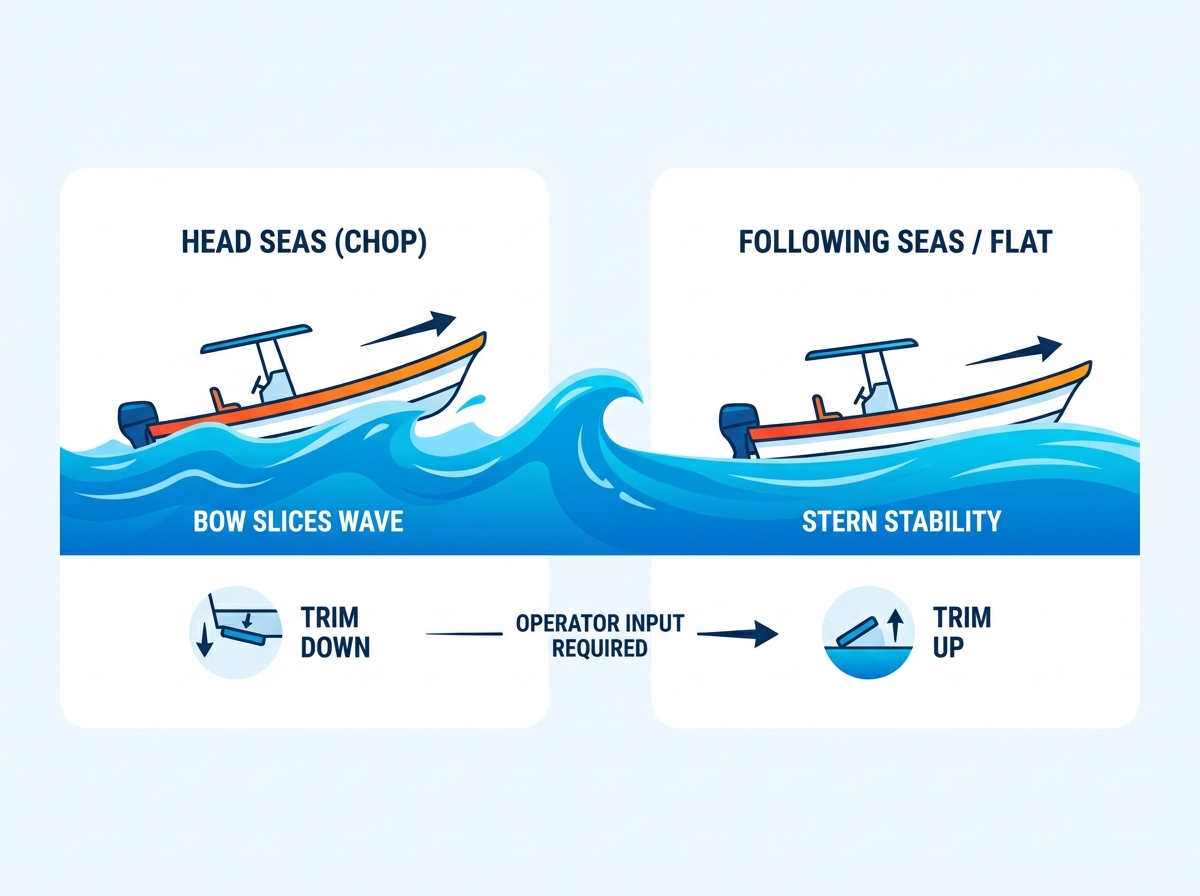
You personally dictate the ride quality of this vessel. A panga requires a highly active captain at the helm at all times. This is not a "set the cruise control and smash" type of boat. It requires constant, vigilant reading of the sea state. You must adjust your inputs continuously to match shifting wave patterns. Lazy driving results in a punishing experience.
Mastering your trim tabs and engine trim is absolutely non-negotiable. Trim adjustments directly alter how the hull interacts with incoming waves. Keep these operational best practices in mind:
Running into head seas: Trim the bow down aggressively. This forces the sharp entry to slice the waves. Failing to trim down exposes the flat stern. The wave impact will then cause the infamous "panga pound." The hull will slap violently.
Navigating following seas: Trim the bow slightly up. You want to prevent burying the nose into the trough. This keeps the vessel tracking straight. It prevents the bow from digging in and steering the boat off course.
Weight distribution heavily influences overall stability. Pangas are relatively light and remarkably narrow compared to modern center consoles. Static and dynamic balance dictates exactly how they track. You must load heavy gear near the centerline. Keep passengers evenly distributed from port to starboard. Uneven weight shifts the center of gravity dramatically. This makes the boat lean hard and alters its hydrodynamic profile. Proper loading ensures the hull performs exactly as the architects designed.
Evaluating hull options requires a strictly objective comparison. The deep-V hull and the panga represent entirely opposite design philosophies. Deep-V hulls are very heavy and feature a much deeper draft. They require massive horsepower to push through the water. These boats excel at high speeds in rough water. They simply crush the waves through sheer mass and deadrise. Conversely, panga hulls are much lighter and highly efficient. They require significantly less horsepower to achieve plane. A panga might use a 90HP motor where a deep-V requires 300HP. They excel at low-to-mid speeds by riding gracefully over the waves rather than plowing.
Let us examine this category comparison closely.
Performance Feature | Traditional Deep-V Hull | Panga Hull |
|---|---|---|
Weight and Draft Profile | Heavy fiberglass hull, deep underwater draft | Lightweight hull construction, ultra-shallow draft |
Engine Power Requirement | Requires massive horsepower to achieve plane | Requires minimal horsepower to run efficiently |
Rough Water Tactic | Crushes through waves at very high speed | Rides over waves safely at low-to-mid speed |
Static Drift Stability | Pronounced side-to-side roll in ocean troughs | High initial stability, minimal rocking motion |
Next, evaluate the cost-to-seaworthiness ratio. A panga grants you true offshore access. It does this at a mere fraction of the initial purchase price. You also save massively on daily fuel costs and engine maintenance. Smaller engines cost less to buy and service. However, you must accept the speed trade-off in rough conditions. It will take longer to reach the fishing grounds.
Finally, understand the sheer subjectivity of "smoothness." What exactly defines a good ride for you? A heavy deep-V definitely offers a softer aerial landing. It cushions the drop into the next trough. A panga, however, provides a noticeably drier ride. It also features far less side-to-side roll on the drift. You must decide which comfort metric matters most to your specific style of boating.
Not all panga hulls are created equal. You need specific structural features for serious offshore work. Pay extremely close attention to the fiberglass layup and stringer grid. Rough water subjects any hull to immense torsional stress. Twisting forces can cause structural failure over time. You should look for heavily glassed stringer systems. Inspect the transom for high-density composite materials. A solid offshore vessel will show absolutely no hull flex under heavy load. The deck should feel rock solid underfoot.
Scuppers and deck drainage represent a critical safety metric. Taking a rogue wave over the rail is always possible offshore. You must evaluate the self-bailing deck system very carefully. Check the size and exact placement of the rear scuppers. They must drain a completely flooded deck in mere seconds. Slow drainage drastically increases your rollover risk in steep ocean swells. Water weight shifts the center of gravity dangerously high.
Assess the gunwale height versus the internal freeboard. Passenger safety is absolutely paramount in rolling seas. Ensure the cockpit depth feels secure for anglers leaning against the gunwales. Low freeboard makes offshore fishing dangerous in sloppy conditions. It becomes too easy to lose your balance.
Use sound, logical shortlisting criteria. Is your primary goal making 50-mile offshore runs at high speeds? If so, regardless of weather, a panga is simply the wrong choice. Is your goal versatile nearshore and offshore capability? Do you want maximum operational economy for weekend trips? If yes, shortlisting a 22-foot or larger fiberglass panga boat is a highly strategic move. You will dominate your local waters efficiently.
Panga boats are objectively seaworthy vessels. Commercial fishermen prove this daily in some of the most unforgiving global waters. They trust these specific hulls for their livelihood. They survive brutal storms in them regularly. However, your personal comfort in rough water remains entirely dependent on your operation. You must show a willingness to drive according to the hull's specific hydrodynamic characteristics. You cannot force it to ride exactly like a heavy deep-V. It demands finesse instead of brute force.
We highly encourage prospective buyers to schedule a targeted sea trial. Pick a specifically choppy, windy day for your test run. Do not test it on perfectly flat water. You need to evaluate the ride dynamics and trim sensitivity firsthand. Feel exactly how it drifts in the trough. Understand how it tracks in following seas. Experiencing these unique variables directly will solidify your confidence before committing to a custom build.
A: Generally, they are exceptionally dry when running directly into head seas. The pronounced bow flare aggressively deflects spray outward and away from the passengers. However, their shallow draft means they ride high on top of the water. In strong crosswinds, this windage can blow spray back into the cockpit.
A: Yes, it absolutely will if driven incorrectly. You must use engine trim or trim tabs to force the bow down. This utilizes the sharp forward entry to slice the waves. If you trim the bow too high, the flat stern slaps the water on reentry. Proper trim eliminates this entirely.
A: We highly recommend a minimum length of 22 feet for dedicated offshore use. A longer waterline is crucial. It spans the wave troughs more effectively, preventing the bow from dipping. Furthermore, 22-foot models typically feature much higher gunwales. This increased freeboard provides critical safety for passengers in ocean swells.
A: You must understand initial versus secondary stability. The flat rear provides excellent initial stability on the drift. It barely rocks when you walk around. The aggressive forward chine provides strong secondary stability, preventing rollovers. However, the narrow beam does create a snappy, quick roll period compared to wider boats.


